AI LinkedIn Prospecting: How a Business Coach Hit a 94% Reply Rate
By Romain QUECHON · Published on February 19, 2026 · Updated on September 30, 2026
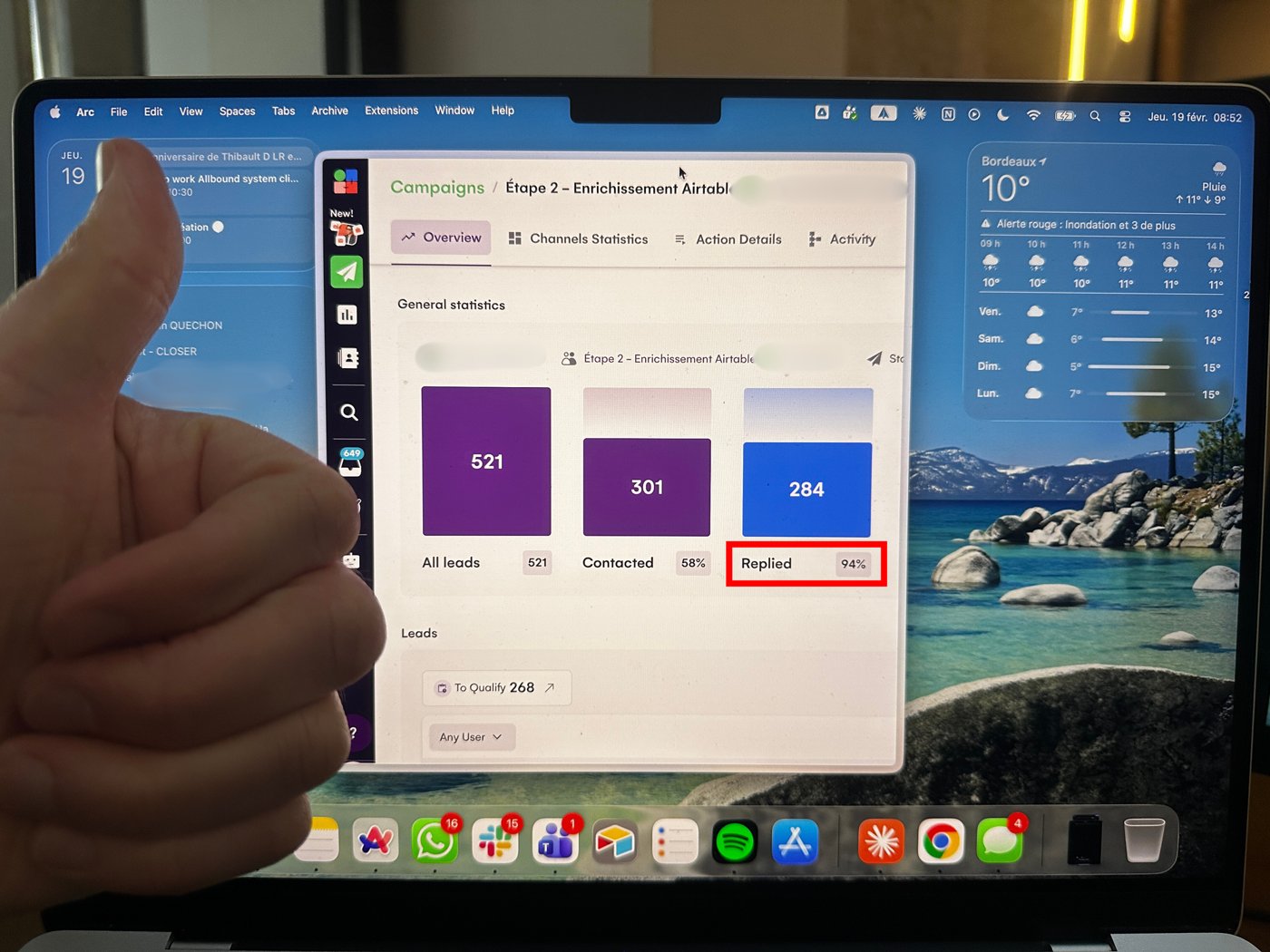
On LinkedIn, a 94% reply rate in cold prospecting becomes possible when three conditions come together: contact people who have just shown interest in your topic, remove everyone who is not in your target, and write a message that asks for input instead of selling.
This playbook documents a real campaign run for a client supported on the Allbound AI platform: a business and AI coach who targets small and mid-sized business leaders. Several weeks of campaign, no lead pre-contacted through another channel. Here is every step, from the initial signal to setting the replies.
The campaign numbers
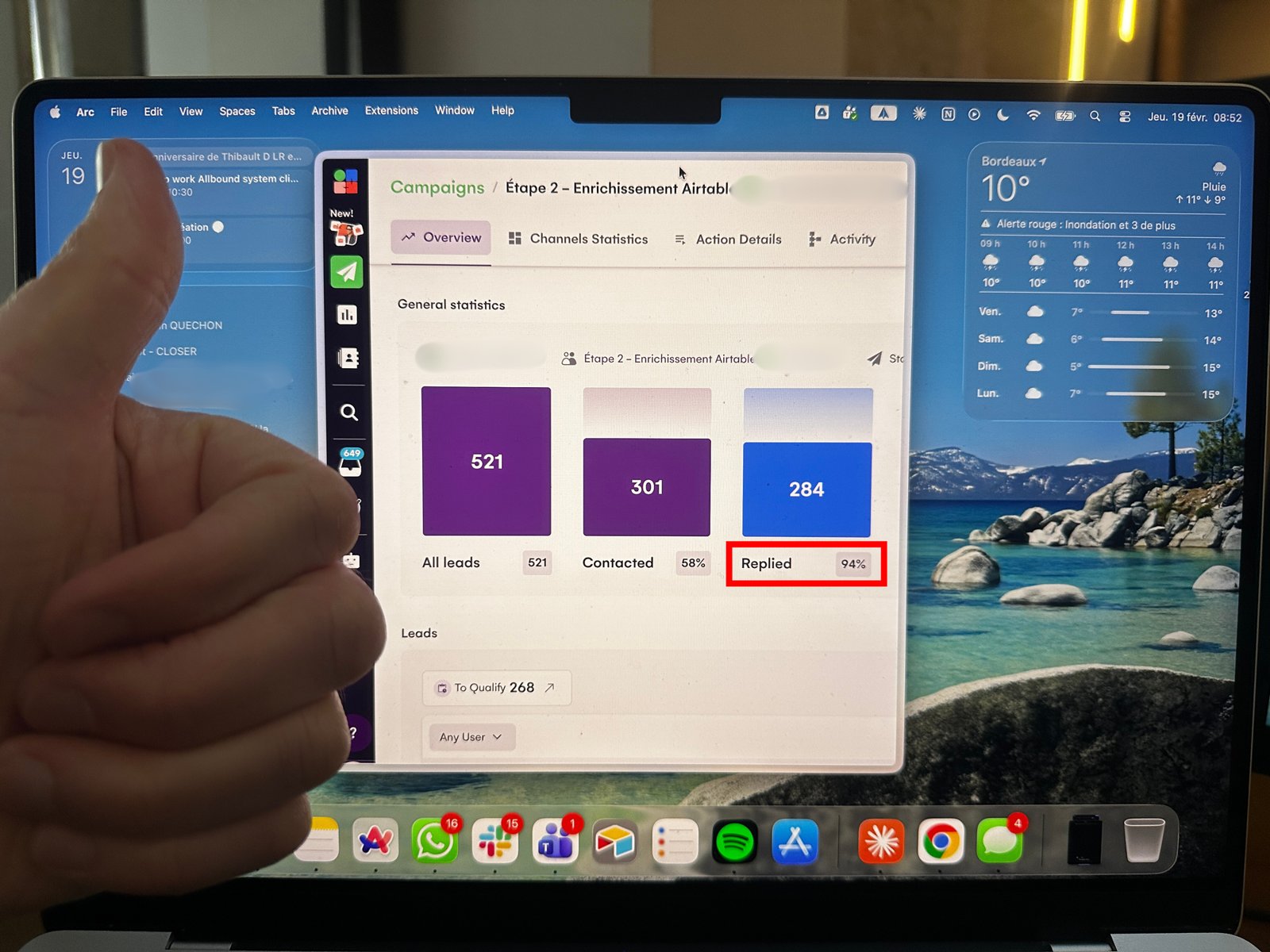
- 521 qualified leads in the pipe.
- 301 accepted connections, that is 58%.
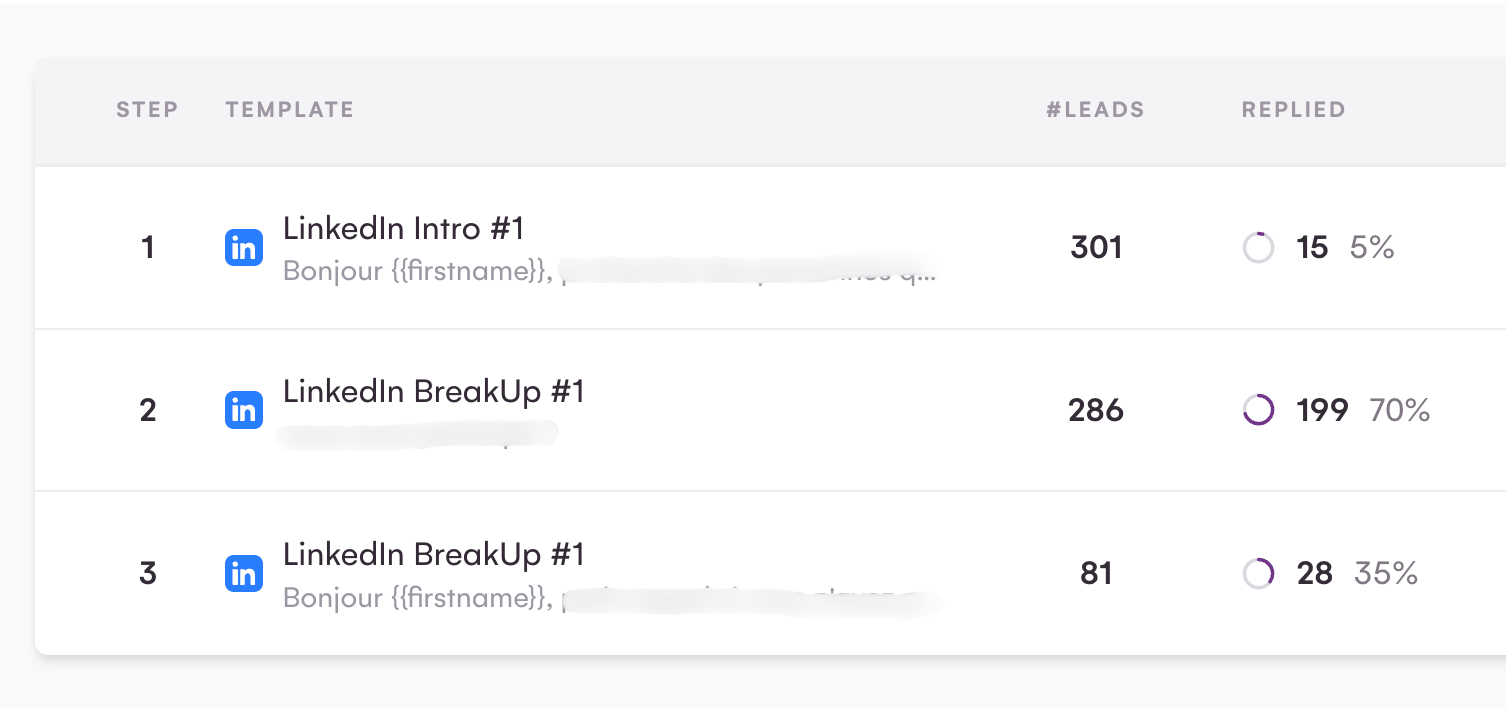
- 284 replies to the first message or to follow-ups.
- 94% reply rate, calculated on accepted connections.
The math
521 leads times 58% acceptance equals 301 connections. 301 connections times 94% reply rate equals 284 conversations. The main lever is not volume: it is everything that happens before the first message.
The context: the client and the challenge
- Client: a business and AI coach, with a 12-month program for small and mid-sized business leaders that combines business development and AI integration.
- Target: CEOs and leaders of small and mid-sized businesses with 5 to 30 employees, across multiple industries.
- Regions: France, Belgium, Switzerland, Luxembourg and Canada.
- Challenge: a coaching market for business leaders that is saturated on LinkedIn.
The question: how do you cold contact these leaders without looking like yet another coaching vendor? The answer comes down to three points: the signal, strict segmentation, and the copywriting.
Step 1: detect intent signals in real time
The first mistake in B2B prospecting is contacting people who are not thinking about your topic. A cold list built on job title and industry mostly contains people who have no need at the moment you write to them.
The reverse approach: detect the signal first, then qualify. For this client, about ten LinkedIn accounts are monitored: thought leaders in the niche and direct competitors. The platform surfaces in real time:
- Likes on these accounts' posts.
- Comments left by new people.
- New connections made with these accounts.
| Classic approach | Signal-based approach | |
|---|---|---|
| Starting point | A CEO found in a list, with no expressed interest | A CEO who just liked a post about business coaching |
| Timing of the message | Random | When the topic is already on their mind |
With the classic approach, the average reply rate runs around 3 to 5%. For more on the signals you can use: LinkedIn engagement signals.
The Allbound AI platform monitors these accounts and surfaces engaged people in real time, with human oversight. See the implementation program.
Step 2: score every lead before the first message
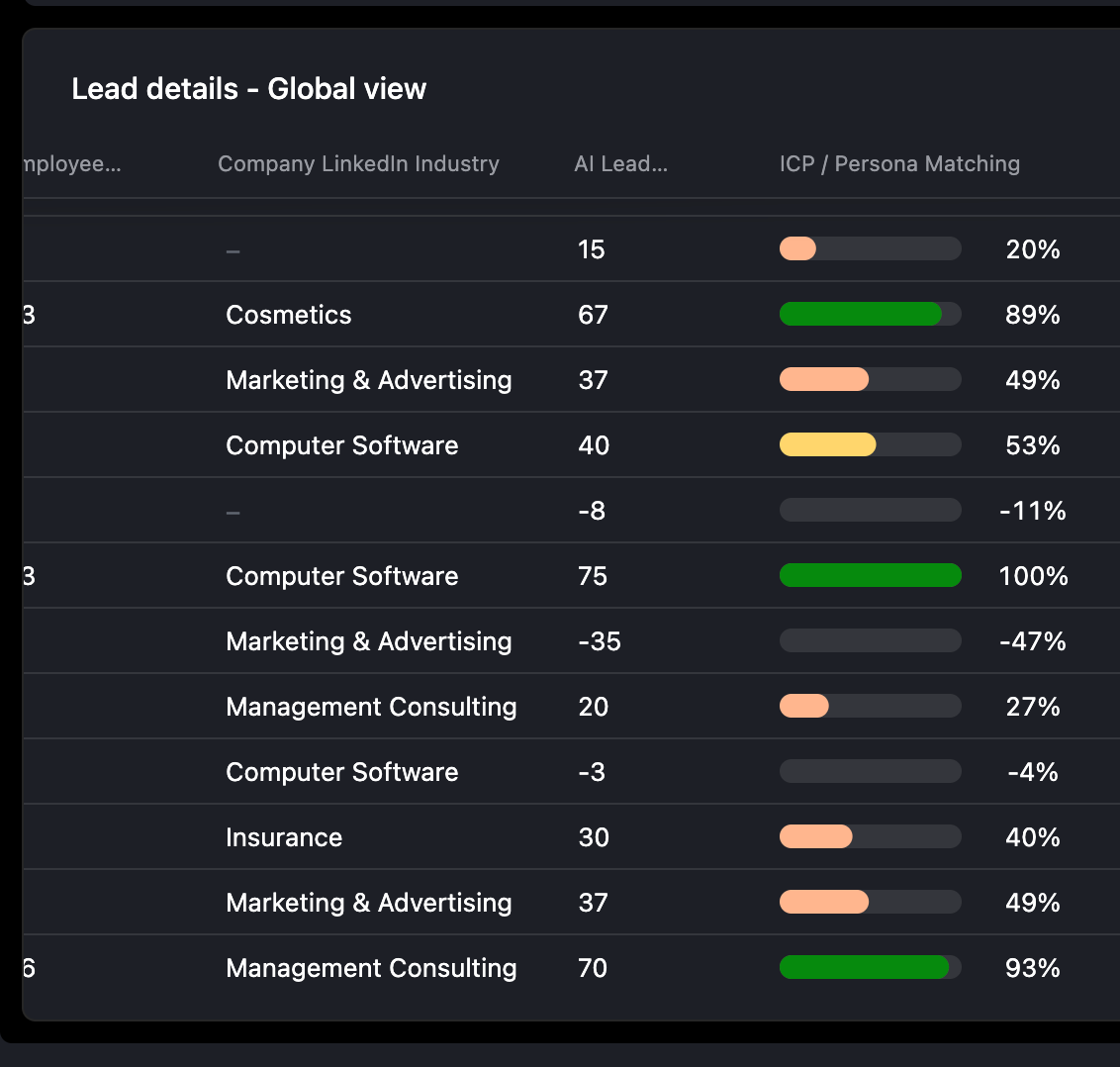
A like can come from a student, a competitor, or a CEO outside the target. Contacting everyone dilutes the results. Scoring therefore happens before the first contact, across 5 dimensions.
| Dimension | Rule applied |
|---|---|
| Persona (heaviest weight) | The AI classifies each profile as Tier 1 CEO, Tier 2 CEO, or out of target, based on job title, LinkedIn description, company size, industry and company age |
| Industry | Positive points for aligned industries, up to minus 200 points for excluded industries |
| Location | Targeted French-speaking countries, minus 100 points elsewhere |
| Company size | 11 to 20 employees: maximum score. 5 to 10 and 21 to 30: secondary. Fewer than 5 or more than 30: heavy penalty |
| Competitors and existing customers | Minus 200 points: the lead is removed from the pipe |
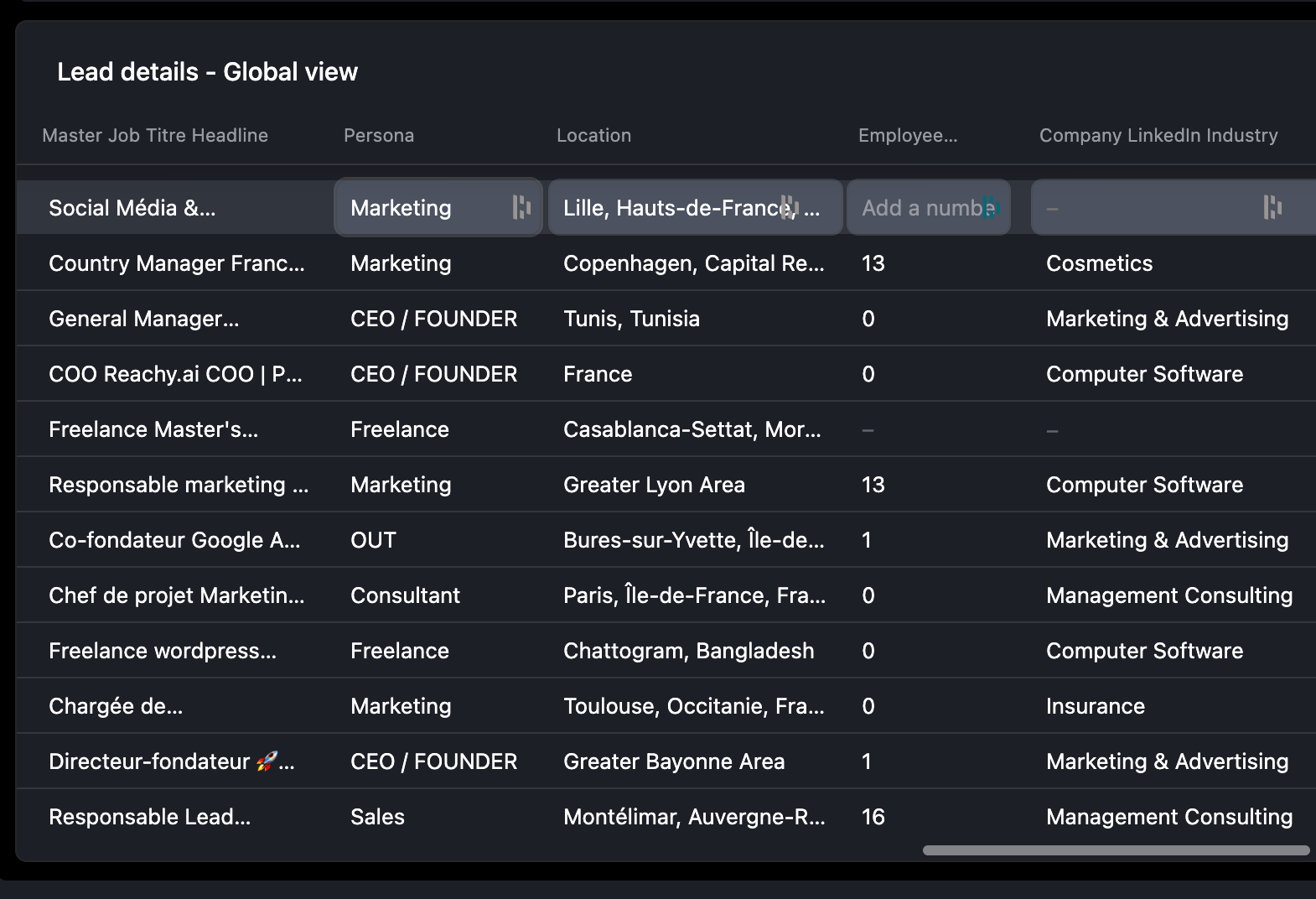
On this campaign, 521 leads passed the filter. The rule: only qualified profiles that showed a signal get contacted. The reply rate follows mechanically. To go further: AI lead scoring on LinkedIn.
Step 3: a message that asks for input instead of pitching
The classic message ("Hi [First name], we help leaders like you...") reveals the intent to sell from the first line. The prospect ignores it.
The angle chosen: a request for feedback. The message asks the prospect for their opinion on the program of a thought leader they know, since they just interacted with them.
- The prospect feels consulted, not prospected.
- The reference to the thought leader creates instant familiarity.
- The question is genuine and opens a real conversation.
- This message is only possible because of the signal detected beforehand.
The message rules and the sequence
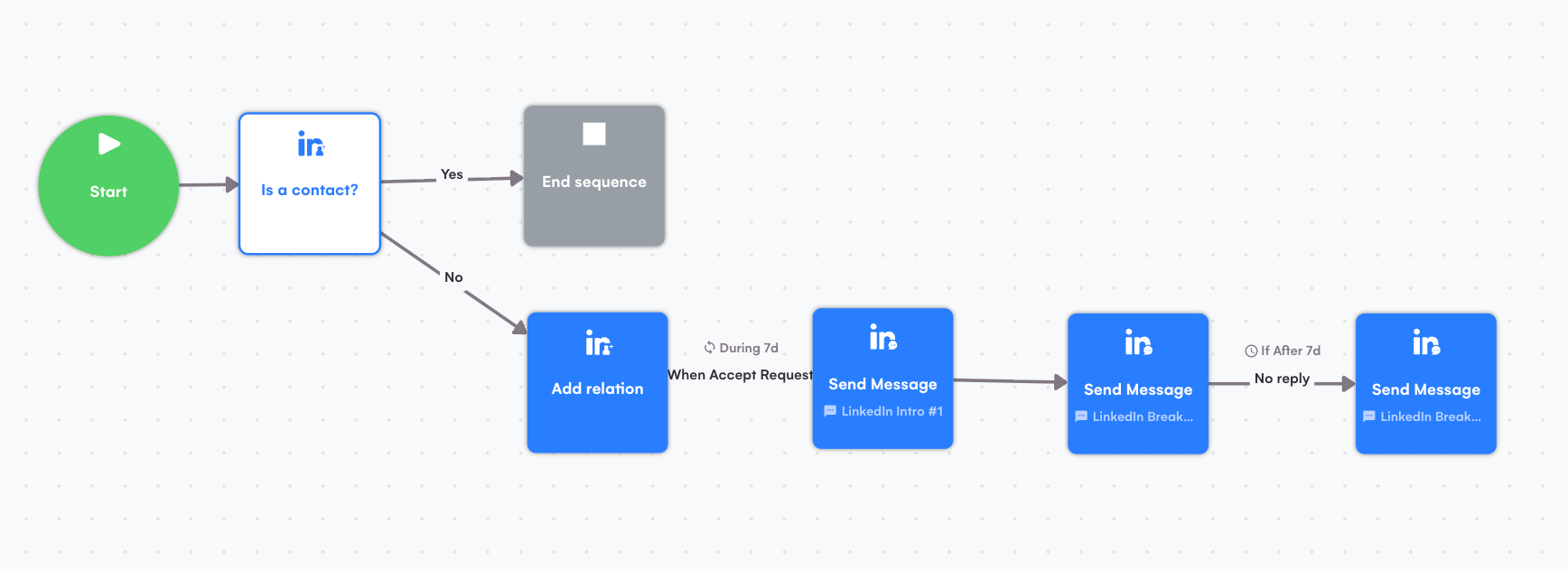
- Short message: 2 to 3 sentences.
- No disguised pitch, a single question.
- Connection request without a note.
- Introduction message as soon as it is accepted.
- Follow-up after 7 days, then one last friendly follow-up.
The 94% includes replies to the initial message and to follow-ups. Most of them arrive with the first message.
Step 4: setting, turning replies into business conversations
Getting a reply is only the start. This is often where conversations die, and most tools stop at the message.
- Interested prospect: dig into the need, assess their readiness, suggest the call when the timing is right.
- Prospect who says no: try to understand why. "No time," "not qualified enough," "too much of a group format," "no budget": each objection is market data or a future opportunity.
A documented no is worth more than silence, as long as you keep a record of it: the platform centralizes every conversation and its outcome.
Each qualified lead is then automatically routed to the right campaign and the right sender, based on their signals, persona, score, owner, location, language or industry.
Replies land in a unified inbox, and each conversation feeds the integrated CRM, with a pipeline adapted to your sales organization. Syncing is possible with HubSpot, Pipedrive, Odoo and other tools through webhooks.
Why 94% and not 3%
| Classic prospecting | Method applied | |
|---|---|---|
| Lead source | Cold list | Real-time intent signals |
| Qualification | Job title and industry (2 criteria) | Automatic scoring across 5 dimensions |
| Filtering | Little to no filtering | Unqualified leads removed before contact |
| Message | Template with variables | Consultation based on the signal |
| Setting | Nonexistent or improvised | Structured process with a qualification tree |
| Reply rate | 3 to 15% | 94% on this campaign |
The signal guarantees the right mindset, the scoring the right profile, the message the connection, and setting turns every reply into data or an opportunity. Remove one step, and the result collapses.
AI executes, humans convert
- The AI monitors interactions in real time, enriches every lead, classifies personas, scores profiles, detects competitors and existing customers, and suggests tailored messages.
- The human chooses which accounts to monitor, sets up the scoring, approves the messages, runs the setting, and converts leads into customers.
It is the combination, not one or the other, that produces the 94%. The full method is described in the Allbound strategy guide.
The limits of the method
This result comes from one campaign, on a specific target: French-speaking leaders of small and mid-sized businesses, in a niche where thought leaders concentrate attention. Without reference accounts to monitor, the feedback-request angle does not work as is. Results depend on the industry, the target, and the quality of execution.
5 tips to apply this week
- List 10 accounts to monitor: the thought leaders and competitors your target already follows.
- Score before you write: a profile outside your target gets no message, even if they liked a post.
- Send the connection request without a note: the first message goes out after it is accepted.
- Ask a single question: request an opinion, not a meeting.
- Document every no: the reason behind the refusal feeds your targeting and your next messages.
Real campaign run for a client supported on the Allbound AI platform. The client's name has been anonymized at their request. Campaign managed by our prospecting team based in Bordeaux.
Frequently asked questions about LinkedIn prospecting with AI
What is a good reply rate in LinkedIn prospecting?
It depends on the target and the method. With classic prospecting from a cold list, the reply rate is often between 3 and 15%. On the campaign described here, built on intent signals and strict scoring, 284 of the 301 connected people replied, that is 94%.
How do you calculate the reply rate of a LinkedIn campaign?
Divide the number of replies by the number of accepted connections, counting replies to the first message and to follow-ups. On this campaign: 284 replies for 301 accepted connections, that is 94%.
What is an intent signal in LinkedIn prospecting?
It is a public action that shows a prospect is thinking about your topic right now: a like or a comment on the post of a thought leader in your niche, or a new connection with a competitor. Contacting the person right after this signal makes the message relevant.
Should you add a note to the LinkedIn connection request?
In this campaign, no. The connection request goes out without a note, and the first message is sent as soon as it is accepted. It is short, asks a single question, and builds on the detected signal.
How are replies tracked after they are sent?
Replies land in a unified inbox, and each conversation feeds the integrated CRM, with a pipeline adapted to your sales organization. Syncing is possible with HubSpot, Pipedrive, Odoo and other tools through webhooks.
Romain QUECHON, founder of Allbound AI (formerly The World of AI). More than 60 clients supported, with 10 to 15 meetings generated per month on average for implementation program clients. See Romain's background · Follow me on LinkedIn